

Green Building Commissioning for Los Angeles
The Green Building commissioning for Los Angeles is different than any other jurisdiction in the state. In this article, we will outline the requirements and variations specific to the City of Angels.
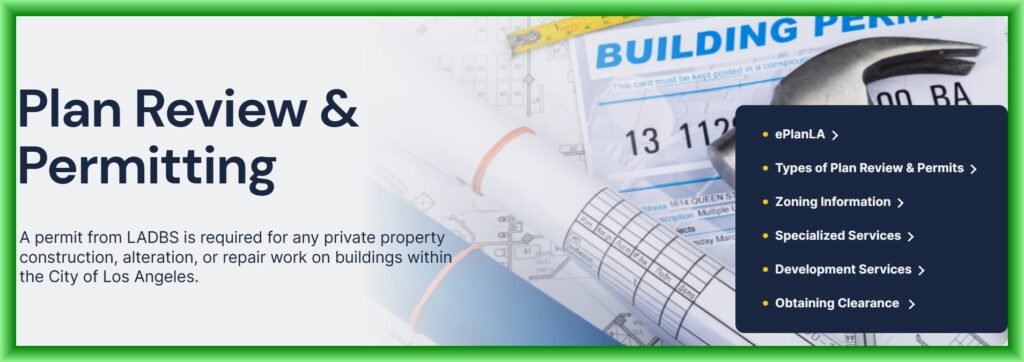
To begin, the governing body for the Green Building commissioning is the Los Angeles Division of Building and Safety. Also known as LADBS, this division is responsible for building permits and inspections within the city.
Every year, the LADBS manages thousands of new building permit applications. The scale and complexity of the permit process have necessitated a more controlled approach to permit compliance compared to other building departments. The simple answer is that the LADBS places greater emphasis on documentation, which results in more work for design and construction teams. Architects, engineers, and contractors who wish to work here must be familiar with the unique LADBS system. Failure to be fully informed will result in longer permit approvals and delays during construction. The commissioning process for the city does not escape this extra effort. In fact, it is far more time-consuming than in other parts of the state.
To be clear, this is not a case of excess bureaucracy, but a worthy attempt by the LADBS to expedite permit approvals and construction inspections. The construction team does more documentation, which saves time for the permit technicians and inspectors. Ultimately, the project benefits as long as the project team understands and follows the system.
The LA Green Building Code
The Los Angeles Building Code, often referred to as LABC, is contained within the LA Municipal Code under Article 9. This non-traditional approach to building code implementation can be confusing to those dealing with it for the first time.
Most building departments in the state adopt the state code and then create individual amendments to address local concerns. This simplified approach makes it easier for architects and engineers to learn local code modifications quickly.
However, Los Angeles is unique in that it covers an area of over five hundred square miles and serves 3.8 million residents. The Los Angeles Building Department has more than 1200 employees and is, by far, the largest building department in the state. The unique approach to building code implementation results from the department’s scale and the wide range of issues that need to be addressed.
So, where do you find the LABC requirements for commissioning?
To begin, the LADBS adopts the current California Green Building Standards Code (CGBSC or CalGreen) under section 99.05.100, Basic Provisions of the LAMC. The section covers Chapter 5 of the CalGreen NonResidential Mandatory Measures. Note that CalGreen Voluntary Measures have not been adopted, so compliance with this Chapter is not required. The amendments to the CalGreen Code are published under the City of Los Angeles Green Building Code.
Under section 99.05.100, there are several amendments to the CGBSC. However, there are no changes to the commissioning section. Therefore, the CalGreen Code sets the requirements for new projects over 10,000 square feet in Los Angeles.
In addition, the California Energy Code also requires commissioning for new projects over 10,000 square feet. Both the CalGreen Code and the Energy Code are authored by the California Energy Commission and are intended as a single process. The Energy Code does add a few extra requirements, including the need to fill out the NRCC-CXR-E Commissioning form.
For brevity’s sake, we will use the abbreviation Cx to refer to the word commissioning.
Commissioning During the Design Phase
An often misunderstood aspect of Green Building commissioning is that, by code, it needs to start at the schematic or design development phase of the project.
Many architects, engineers, and developers are under the mistaken impression that it starts at the construction document phase. The reason for this confusion is the CalGreen Code itself. The code does not make this clear. However, the California Energy Code notes that the document, NRCC-CXR-E Commissioning, must be submitted with the permit documents. The form notes that a Design Review needs to be documented by the commissioning coordinator and must occur during the Schematic Design or Design Development phase of the project. This code-required step is often overlooked, which can cause issues when the “responsible party” has to sign their name, as well as where and when this took place. In this case, the architect of record may be put in a position of having to sign a false statement.
The responsibility falls on the architect of record to know that commissioning begins at the Design Development phase of the project for all new buildings in California over 10,000 square feet.
After the Design Review, the next step in the process is for the commissioning coordinator to develop the three documents required for the permit submittal. This requirement is clarified in the ICC publication “The Guide to the Green Building Standards Code, Nonresidential“.

The documents required for permit submittal include:
- Owner’s Project Requirements (OPR): This document lays out the owner’s perspective on the design as it relates to energy and sustainable measures.
- Basis of Design (BOD): This document details the specific systems and equipment that will be provided in accordance with the Owner’s Project Requirements.
- Commissioning Plan: This document is typically in specification format and details the commissioning process through construction and project close-out.
For most jurisdictions, the above is all that is required for the permit application. However, LA has added several additional steps. These steps involve the architect, the MEP engineers, and the building owner or owner’s representative.
Permitting and Construction
Permit Documents
In addition to the OPR, BOD, and Commissioning Plan noted above, LADBS mandates the following forms that must be completed, signed, and inserted into a drawing sheet.
- GRN20 OPR: Requires recording which page number the individual items are shown in the submitted OPR.
- GRN21 BOD: Requires recording which page number the individual items are shown in the submitted BOD.
- GRN23 Commissioning Measures: Requires the Cx coordinator to sign a statement that the OPR, BOD, and Cx requirements have been integrated into the permit plans.
- GRN24 Functional Performance Testing: This blank form gets inserted into the permit set but is filled out at the end of the project.
- GRN25 Documentation Training: This blank form gets inserted into the permit set but is filled out at the end of the project.
- GRN26 Commissioning Report: This blank form gets inserted into the permit set but is filled out at the end of the project.
Note that the GRN text above is a link to the actual forms.
Commissioning Kick-Off Meeting
The Cx coordinator leads a Cx Kick Off meeting, including all affected members of the construction team. The Cx coordinator explains the Cx process, responsibilities, tasks timelines, and fields any questions.
Submittals
Submittals for the systems identified in the Cx Plan must be forwarded to the Cx coordinator, who will review them for compliance with the construction documents and the Title 24 report. The coordinator has no authority to approve or reject submittals or to give any direction to the contractors. If an issue is noted, the coordinator will inform the design team of the specifics. The architectural or engineering team affected will need to resolve the issue.
Functional Performance Tests
Once the submittals have been approved on the systems to be commissioned, the Cx coordinator will author the Functional Performance Tests (FPTs). The functional performance tests are a systematic process of verifying and documenting that a building’s systems operate according to the design and meet the owner’s requirements. Once systems are installed and ready for startup, the subcontractor will fill out the FPTs and forward them to the Cx coordinator for review. The coordinator will assist in resolving any issues with the design and construction team.
RFIs and Change Orders
Any RFI’s or change orders on the commissioned systems must be forwarded to the Cx coordinator. They will decide if any changes are necessary to the Cx process.
Air Balance Report
The final air balance report should be forwarded to the Cx coordinator, who will review for compliance with the design.
Final Commissioning Report
The Final Commissioning Report documents that the owner’s priorities have been successfully incorporated into the project and that the Cx process has been completed. The report includes all the documentation from the beginning of the project to the end, submittals excluded. This report is submitted to the local building department to close out the commissioning portion of the building permit.
Final Thoughts
Commissioning is all about communication. Communication should begin early in the design stage and continue throughout the project. Poor communication regarding the commissioning scope and responsibilities frequently turns the end phase of a project into a quagmire.
Commissioning is also about engaging all parties to work together. A good commissioning coordinator can improve the efficiency of the process. This is accomplished by avoiding duplication of procedures by working with your subcontractors to streamline the process.
In addition to the City of Angels, we also provide commissioning services to the greater Los Angeles area, including the counties of Los Angeles, Long Beach, Ventura, San Bernardino, Orange, and Riverside. All five counties require CalGreen and Title 24 commissioning for new buildings 10,000 square feet and over. Fortunately, they have a simpler and less expensive process than LA City.
CalGreen Energy Services knows how to ensure all parties on your project understand their roles and responsibilities. This understanding can eliminate confusion and ensure the building owner has a properly functioning structure that will serve them well for years to come.
At CalGreen Energy Services, we are specialists in the CalGreen Code and Title 24 commissioning. CalGreen is our only business.
Call us today and let us show you how we can help with your project.
Gary Welch
Email: gary@calgreenenergyservices.com
Phone: 707-328-5299


Gary Welch has over 35 years experience in the field of sustainable building design. He is the CEO of CalGreen Energy Services. Gary is an ICC Certified CalGreen Special Inspector and Plans Examiner.